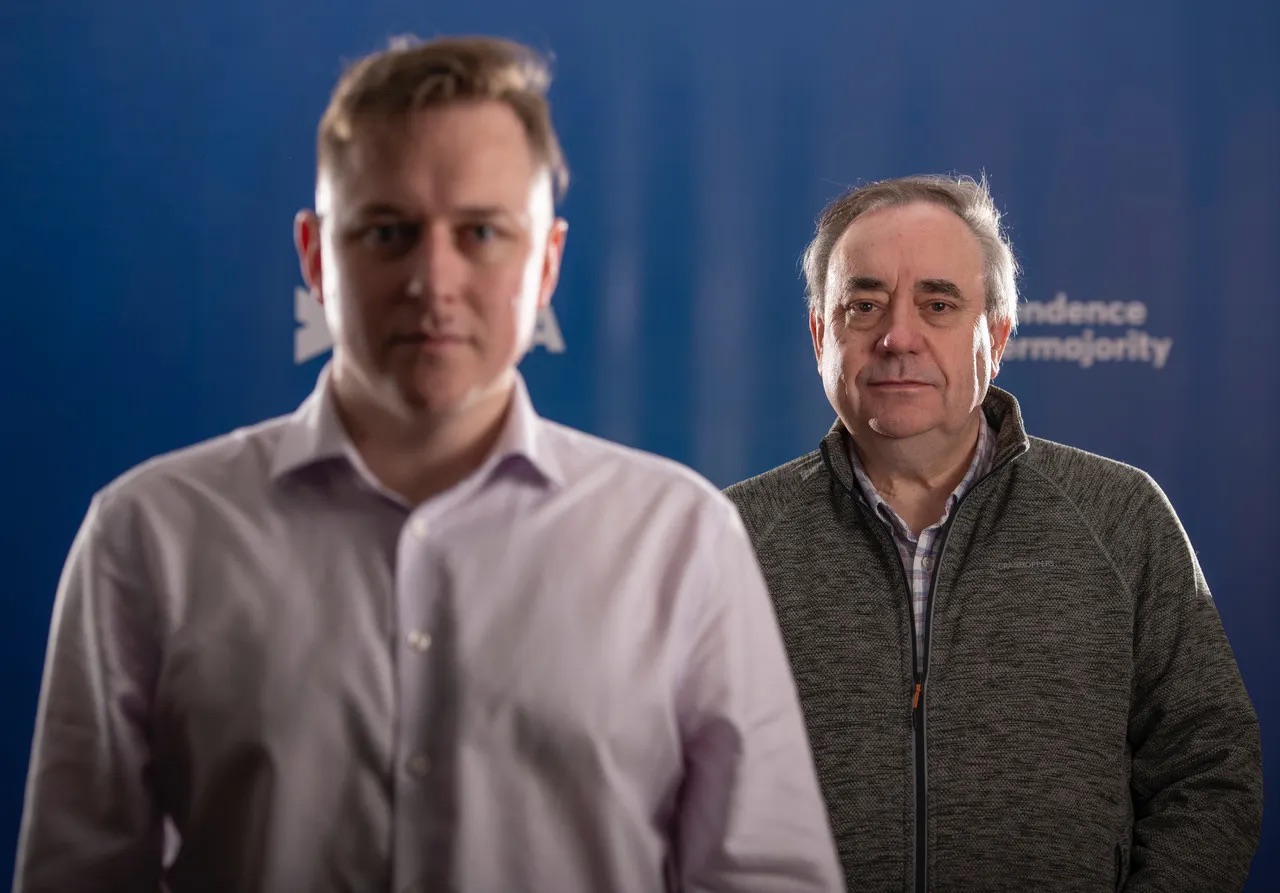
Originally published in iScot Magazine Issue 100.
"I served as the SNP's new media strategist from 2009 to 2016, pioneering digital campaign strategies that transformed Scotland's political landscape. As a trusted advisor to Alex Salmond through historic victories and challenges, I played key roles in the SNP's 2011 Holyrood triumph, during which we turned a slim majority into 69 MSPs and secured the first majority government since devolution. During the 2014 independence referendum campaign, we increased support by 28% in nine months, and in the 2015 Westminster election, we achieved an unprecedented 833% increase in SNP representation. I witnessed firsthand a leader who believed in empowering ordinary people to achieve extraordinary things. I later joined Salmond in establishing the Alba Party, continuing our shared vision for Scottish independence. As founder and Executive Director of Industrial Strategic Ltd., I leverage my expertise in communications engineering, technology innovation, and digital transformation for political and corporate clients internationally."
Alex Salmond's story is one of passion, courage, and an unbreakable commitment to Scotland's freedom. He was a visionary who saw possibilities others could not, inspiring thousands to believe in a brighter future for their country. Refusing to fade into the background of political history, he didn't just play the game of politics—he fundamentally altered its rules, ensuring it served the people rather than the heich heid yins (the establishment elites).
To those who knew or worked alongside him, Alex was more than a political leader—he was a strategist, an entrepreneurial politician, and above all, a patriot. He was devoted to seeing Scotland take full responsibility for itself. His vision wasn't about personal power but about empowering Scotland's people—he believed in their potential and in their inherent right to shape their own destiny.
Alex was a unifying leader who could bring people from across the country and political spectrum together, rallying them around not just the cause of the day but the enduring cause of freedom itself. His extraordinary talent for uniting diverse voices and empowering ordinary people to participate reflected his core belief: the strength of a nation rests not in its leaders, but in the collective will of its people.
I first met Alex during my time as the SNP's new media strategist, from late 2009 until mid-2016. It was a pivotal time, where we took the fledgling power of social media marketing and integrated it into the SNP's political engine, forever changing the landscape of UK politics. That first meeting came as a surprise—at Jolly's Restaurant in Edinburgh one Thursday night in late 2009. I was due to meet Alex and the SNP strategy team the following morning at SNP HQ, and Jennifer Dempsie, who I was dating at the time, introduced us that night. Eager to make a good impression, I found Alex equally keen to talk, and we ended up sharing brandy late into the night. I told him about how the ordinary people—the Wee Fowk—at Bannockburn had helped secure the victory that day, and he shared his idea for the SNP's campaign slogan for the upcoming 2010 UK General Election: 'Scotland Needs Champions'. He believed that people who stood up against all odds were the true champions of Scotland. History might not repeat, but it certainly rhymes.
The 2010 UK General Election was our testing ground for new strategies and tactics—digital ideas that many dismissed as trivial. Originally framed as the post-Obama 2008 'Internet election,' it quickly shifted focus, becoming the 'TV debate election' with the SNP deliberately excluded. Furious, Alex instructed the team to prepare for legal challenge and for us to raise the necessary funds to sue the BBC to either include the SNP or to exclude the election debates entirely from viewers in Scotland.
What happened next was a first for UK politics. Before 'crowdfunding' was a common concept, we raised £50,000 from 1,600 small donations within just 36 hours. We then took the BBC to the Court of Session. Their lawyers initially misled the court, suggesting it wasn't technically feasible to prevent broadcast in Scotland—a claim we quickly proved false. I recall the panic and their lengthy apologies to the judge as they retracted their inaccurate statements from the previous day. Though the judge ultimately ruled in the BBC's favour, the message was clear: Alex Salmond and the SNP team he led were no pushovers.
By 2011, everything fell into place. The Holyrood elections were a resounding triumph—not just for Alex and the SNP, but for Scotland as a whole. Years of hard work, lessons from 2010, and the brilliance of the people Alex surrounded himself with resulted in an outright majority. For the first time, Scotland had a government with a clear mandate to pursue an independence referendum. The technological foundation we built—using tools like ACTivate from entrepreneur Mark Shaw and NationBuilder, which I introduced—helped decentralise campaigning efforts, giving grassroots activists more autonomy.
Alex instinctively understood that victory required energising and empowering the people. His leadership was rooted in a steadfast belief that the party must trust its supporters to take centralised messages and adapt them in their own authentic voices to reach their communities effectively.
The difference between Alex's leadership style and his opponents' became especially evident during one critical moment in the 2011 campaign. Labour leader Iain Gray and his colleagues, confronted by protesters furious over Westminster's public spending cuts, chose to flee—Gray infamously ran into a Subway sandwich shop, mistaking it for the Glasgow Subway system. Alex, true to form, responded differently. He invited the protesters in for coffee and cake, listened to their grievances, and pledged that his government would shield Scotland from the brunt of Westminster's austerity. That moment epitomised Alex's genuine connection to the people and his composure under pressure.
Another moment perfectly illustrated Alex's humour and his deep sense of decency. During a campaign stop at a Highland church, while he was busy interacting with attendees, I discreetly found a plug to charge our vital campaign equipment—cameras and WiFi tools. Alex noticed and interrupted proceedings, calling out, "Ladies, please meet Captain Kirk over there." Embarrassed, I looked up, and Alex continued, "Alright, son, now you may ask them if you might use their electricity." It was classic Salmond—using humour to make a point about propriety, reminding us that respect and proper conduct mattered, no matter how busy or focused we were. It was always better to do things the right way.
Around the time of the 2011 election, my mother moved into a new property and met the elderly farmer next door. He noticed an SNP sticker on her car and shared a remarkable story of his conversion from lifelong Conservative and Unionist. It all began in 1987, when Alex first became the MP for the area. Alex had shown a genuine interest in the farmer's sheep at Thainstone livestock market. Years later, at the same market, Alex immediately broke away from his advisors when he spotted the farmer, greeted him by name, and asked about his "wonderful sheep." Such was Alex Salmond's memory and sincere interest in people that, after fifteen years, he remembered not just the man but the details of their conversation. From that day on, the farmer only voted for Alex. It was a perfect example of how Alex earned the deep respect of those he served—even if they didn't share all his hopes for the country.
The 2014 Independence Referendum tested every relationship and skill to its limit. It was the most intense period of my professional life. I had helped establish Yes Scotland and its campaigning infrastructure before handing it to a dedicated team and stepping away to focus on commercial projects. By late 2013, however, the campaign needed new momentum, and I was called back to help breathe new life into it. With Alex taking a more focused role and me working alongside Peter Murrell and Mark Shaw, we achieved what many thought impossible—driving Yes support from 27% nine months out to an extraordinary 55% just eleven days before the vote. Then came "The Vow"—a last-minute concoction of promises and veiled threats that sowed enough doubt to flip the scale. The devastation was palpable as Alex did what he thought was right: he resigned the next morning. It was a selfless act, stepping aside to allow the movement to heal and move forward. In hindsight, many of us, including Alex, wished he hadn't—especially given the opportunities squandered by those who took over after his departure.
I stayed with the SNP through the success of the 2015 Westminster General Election, another Holyrood victory in 2016, and worked to help secure Scotland's pro-EU vote during the Brexit referendum. By August 2016, however, it became impossible to ignore troubling changes. The named person scheme, questionable policy decisions, and increasing centralisation of power—all indicated a leadership that had lost its connection with the party's grassroots. That disconnect ultimately marked the end of my professional journey with the SNP.
Life moved on, marked by commercial ups and downs, until I embarked on a new venture with Alex and Tasmina Ahmed-Sheikh—a cybersecurity company founded on the belief that privacy is a fundamental right. Just as we began, the first signs of a political storm started to emerge. A whisper campaign, led by Nicola Sturgeon's Chief of Staff, Liz Lloyd, snaked its way into the press. "Historic accusations," they were called. Our business was immediately sidelined as we diverted efforts to raise funds to fight the Scottish Government in court. Though Alex was ultimately vindicated, with the judge declaring that the Scottish Government had acted with bias, the relief was tragically short-lived. Within weeks, criminal charges emerged—built on allegations solicited from former allies. Witnessing this was heartbreaking—for Alex, for Moira, for his team, for me, and for everyone who stood by him during those darkest times. I will never forget those who now praise Alex's legacy loudly, yet whose silence during those crucial moments spoke louder than words.
The days that followed were some of the darkest imaginable—combing through messages, emails, and WhatsApp conversations, uncovering a web of deceit spun by former colleagues and friends. Their WhatsApp groups and witness testimonies claimed they acted for "the sisterhood," but the High Court of Scotland dismantled these lies, piece by piece. Though they may have convinced themselves they were serving social justice, what they created was far more sinister—sacrificial justice masquerading as social justice. Alex was ultimately cleared of all charges by Scotland's highest court, but damage was done. Though he never saw the inside of a prison cell, he was trapped in a different kind of prison—one made of heartbreak, betrayal, and an unwavering determination to clear his name. However, despite such a heavy burden, Alex often reminded us, lies run sprints, but truth runs marathons.
In the final years of his life, Alex exhibited the resilience that defined his career. Together with Laurie Flynn, Tasmina, Chris McEleny, and me, he founded the Alba Party—a new movement for independence aimed at leveraging Scotland's electoral system to achieve a supermajority in Holyrood. The goal was ambitious but straightforward: to displace unionist parties and build an independence parliament. This vision, however, faced fierce resistance. Nicola Sturgeon and other SNP leaders saw it not as an opportunity for independence, but as a challenge to their power. They promoted the #BothVotesSNP strategy, despite knowing it was mathematically impossible to convert List votes into SNP MSPs in regions where constituency wins were assured. This deliberate approach squandered over one million independence-supporting votes that could have secured Alba Party MSPs and an independence supermajority. Their fear of Alex's return to frontline politics led them to sabotage this route, gifting lost votes to unionist parties and solidifying Tory opposition at Holyrood.
In my eyes, Alex Salmond stands shoulder to shoulder with Robert the Bruce. He understood not only the intricacies of political strategy but, more importantly, how to unite people behind a common cause. Just as Bruce did centuries ago, Alex rallied Scots from all walks of life to the cause of independence. He knew—as Bannockburn had proven—that ultimate victory would stem from the ordinary people, the Wee Fowk, rising when the moment was right. Even in adversity, he inspired countless individuals to persist, to refuse to retreat into political shadows, and to keep striving for a self-determined Scotland.
The echoes of Scotland's past ran deeply through Alex's story. I occasionally think of the Jacobite rising of 1745, when Bonnie Prince Charlie led his Highland army south, only to face that fateful council of war at Derby. The Prince, at odds with his Scottish lords who urged retreat, was fired by a vision his commanders couldn't comprehend—just as Alex's most ambitious dreams for Scotland often exceeded what more cautious minds could envision. But unlike the aftermath of Culloden, where despair shadowed lost potential, Alex never surrendered to defeatism. He remained steadfast in his belief that Scotland's true power lay not in its leaders, but in its people. Time and again, he reminded us that the true custodians of Scotland's future were not the politicians in Westminster or even in Holyrood, but the ordinary citizens determined to fight for their future—just as the Highlanders had fought for their Prince.
Alex's unwavering faith in people's potential manifested in every innovation he championed. In the 1990s, he pushed the SNP to embrace emerging forms of communication—pioneering the use of multimedia through television, radio, and even music. Later, he became the driving force behind the SNP's digital transformation in the 2010s, which led to my appointment. When cautious advisors hesitated, Alex backed our most ambitious ideas, especially those that decentralised campaign efforts and empowered activists with state-of-the-art technologies. He understood that modern political battles, much like historical ones, would be won by empowering people at the grassroots level.
Ultimately, Alex Salmond's legacy transcends the battles fought and the victories achieved. It endures in the values he instilled—an unshakeable belief that ordinary people can and will rise, take charge, and complete the work begun by others. Though the supermajority for independence evaded us in 2021, the path he illuminated remains clear: a recognised mandate at the ballot box for independence negotiations to begin between a majority pro-independence Scottish Parliament and Westminster. This vision awaits its defining moment in 2026—not merely another election, but a historic juncture where Scotland's people—the Wee Fowk—could finally transform centuries-old aspirations into modern reality.
Alex's true legacy cannot be captured in newspaper headlines or the cynical political machinations of those who tried to bring him down. Instead, it lives on in the courage of those who, inspired by his example, will rise in 2026 to proclaim, "Now is the time!" He showed us that independence transcends mere constitutional change—it is about self-belief, taking full responsibility for our successes and setbacks, and having the confidence to shape our future as individuals, as communities, and as a nation.
One of Alex's most memorable pieces of advice came during the count at the Aberdeen Exhibition & Conference Centre for the 2011 Holyrood election. We were gathered in a hotel room with Moira and other staffers, watching the results roll in. As news of significant victories came through, Alex—characteristically delaying his arrival at the count—turned to me, his eyes twinkling, and said, "Always leave them wanting more, Captain." Fitting words from a man who understood that every triumph was but one step in a greater journey. It's tragically ironic, given that he left us before seeing the full realisation of his life's work—leaving us all wanting more.
Leaders of Alex Salmond's calibre may emerge only once in a thousand years, but the principles they uphold are timeless. He showed us that the cause of freedom, once ignited in the hearts of people, can never be extinguished.
The victory Alex envisioned does not require pitchforks or rudimentary weapons like those wielded by the Wee Fowk at Bannockburn. Instead, it will emerge from countless conversations with friends, family, and colleagues; from holding leaders accountable for their failures; and from talented individuals stepping up to serve their communities. The battle will be won through the quiet resolve of ordinary people, united in fellowship, armed with a focused strategy and courage in their hearts.
When the Wee Fowk gather at the Holyrood ballot boxes in 2026, they will carry not just their own hopes, but also the dreams of countless generations. I hope they will remember the leader who believed in them, even when they doubted themselves. And they will rise again, just as Alexander Elliot Anderson Salmond always knew—and believed—they would.
So, I say: from Bannockburn to the ballot box, we the Wee Fowk must rise again.
Politicians may fail, but never we; we the people are the roots of the Liberty Tree.